Blog
When to hire a virtual assistant for customer support: three tests on your own data
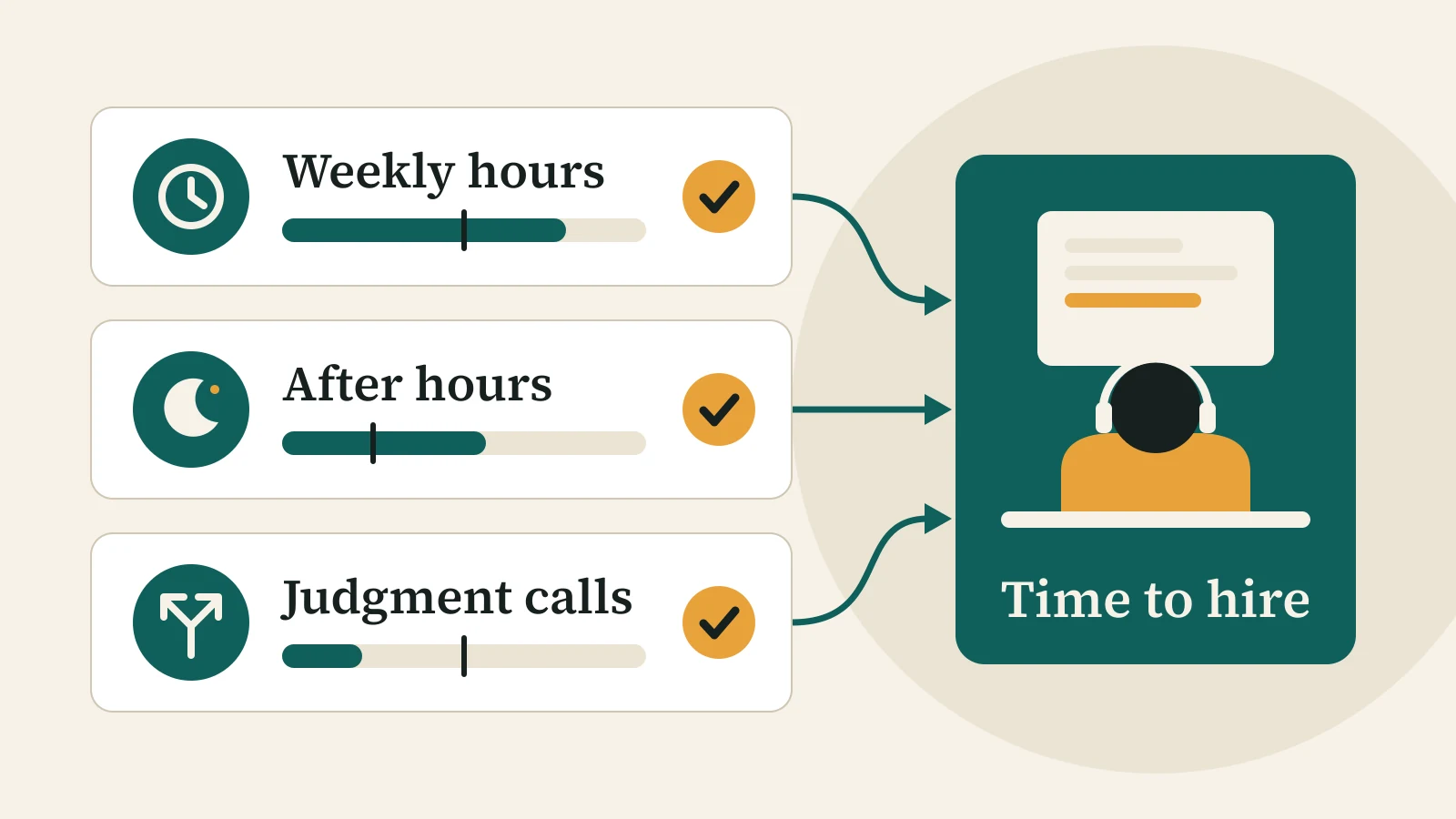
The right time to hire a virtual assistant for customer support is when 30 days of your own help desk data say so, not when a vendor's rule of thumb does. Run three tests on that month: how many hours you spend on support each week, how much of the queue arrives while you are offline, and how many tickets need your judgment. Then price your hour against a support seat. If the hours are large and the queue waits overnight, it is time.
Quick answer
- Before you hire a virtual assistant for customer support, skip the one-size thresholds. Vendor guides say to hire at 2 hours a day or 15 hours a week, and neither cites a source.
- Test one: log your support hours for 30 days. My rule of thumb: under about 20 hours a week is too little for a full-time seat.
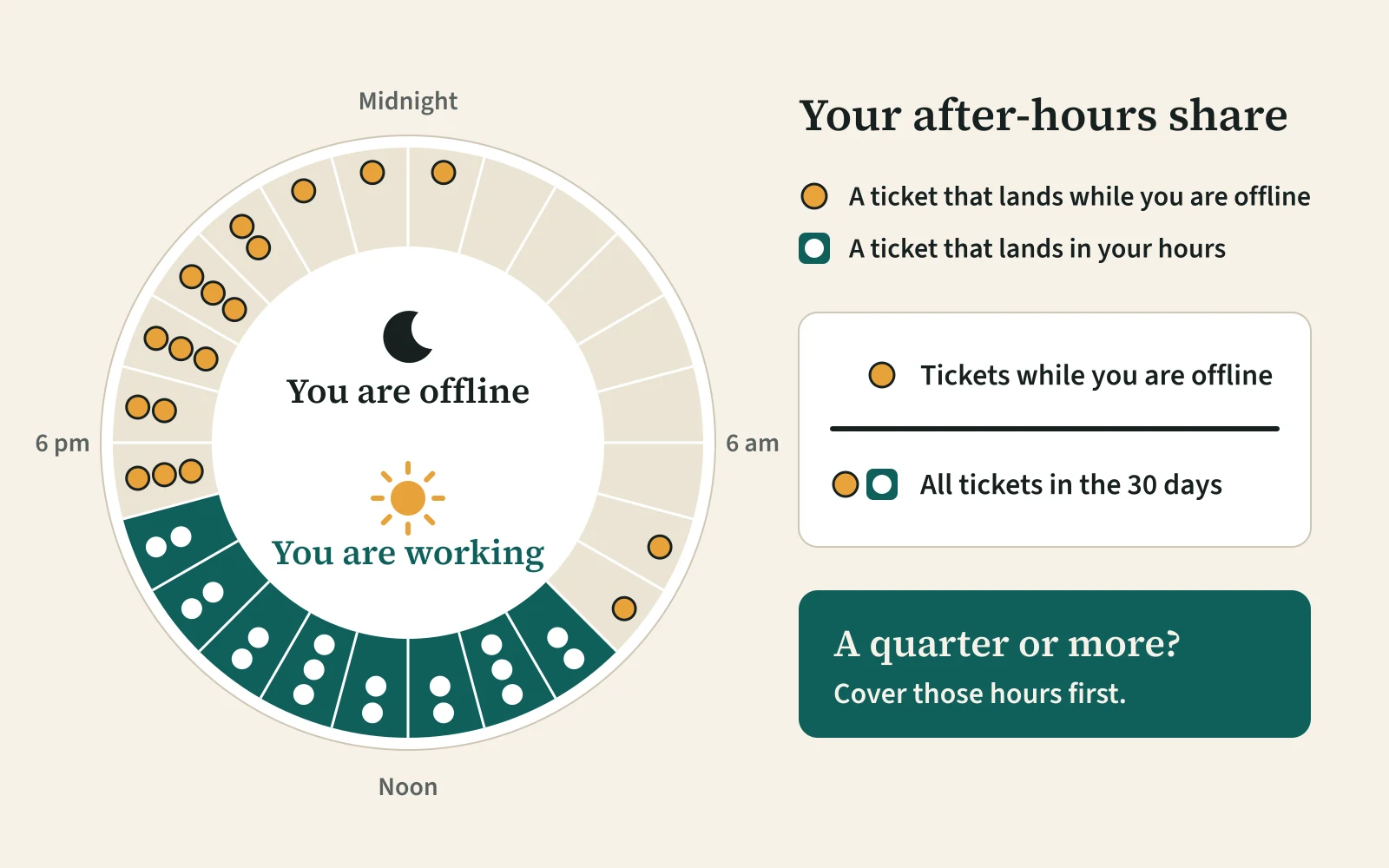
- Test two: count the tickets that arrive while you are offline. If a quarter or more wait overnight, cover those hours first.
- Test three: tag 100 tickets as template or judgment. A queue of mostly templates is ready to hand off.
- Price it: a full-time support seat through our partner provider in Davao City is about USD 1,817 to 2,076 a month for about 173 hours. A US hire with benefits is about USD 6,159 a month.
- Size it: tickets a day times handle time, plus an allowance for leave, tells you if one agent is enough.
How many hours a week does support really take you?
Your first test is the number of hours you spent on support in the last 30 days, measured with a timer. Vendor guides offer ready-made lines instead. Stealth Agents says to hire when admin takes more than 2 hours a day (May 11, 2026). Wishup sets the bar at more than 15 hours a week (September 24, 2026). Neither page cites a source for its line, and both sell assistants.
Your own log is better, because it measures the work a virtual assistant for customer support would take over. Start a timer each time you open the help desk, the inbox or marketplace messages. Count email, chat, calls, refunds and the replies you send from your phone at night. Divide the month by four.
Then read the result. A full-time seat is billed for 8 hours every working day, about 173 hours a month, busy or quiet. So if support takes you under about 20 hours a week, a full-time virtual assistant for customer support is more than the job needs. Keep the work, or give it to a part-time freelancer. At 20 hours or more, a full seat starts to earn its cost.
How much of your queue arrives after hours?
The second test is the share of tickets that arrive when you are not working: evenings, weekends and holidays. Many help desks already chart this. The prebuilt Support dashboard in Zendesk Explore shows the share of tickets created in each hour and the average per weekday. Help Scout's All Channels report has a Busiest Time of Day chart (updated November 5, 2026). Gorgias has a Busiest times heatmap of hours and weekdays, in your own time zone.
Count the tickets that land outside your hours and divide by the total. My line is a quarter. Above it, customers wait overnight, and your first response time shows it. That is a coverage problem, not a workload problem. The first hire should start on the hours you are offline, not on your own day.
How many tickets need a judgment call?
The third test is how many tickets you answer from a template and how many need you to decide something. Take your last 100 tickets and tag each one. Order status, address changes and returns inside your policy are template tickets. A refund outside policy, a damaged item, an angry customer or a product question only you can answer is a judgment ticket.
Several replies in a Shopify Community thread, "How are you handling customer support once it grows past you personally?" (August 5, 2026), suggest the same order. Sort your tickets, answer the repeat questions with help pages and saved replies, and then hire. Some of the people replying sell support apps. It is anecdote, not data, but the step costs you nothing to try.
If most tickets are templates, a virtual assistant for customer support can take them once your saved replies exist. If most need judgment, write the rules down first, as a customer service SOP for each ticket type. Otherwise every hard ticket still comes back to you.
Does a support seat cost less than your own hour?
A support seat pays off when the hours it frees are worth more to you than its monthly cost. So price a virtual assistant for customer support against your hour: what you would earn in it selling, buying stock or building the product.
A full-time seat through our partner provider in Davao City costs USD 10.50 to 12 an hour. That is about USD 1,817 to 2,076 a month for about 173 hours. The rate covers recruitment, initial training, ongoing team-lead supervision, standard operational support, and all staffing and employment costs.
A local hire costs far more. The Bureau of Labor Statistics puts the median wage for US customer service representatives at USD 21.53 an hour (May 2025). Across all private-industry jobs, employers add an average of USD 14.07 per hour worked in benefits (BLS employer costs, June 2026). Together that is about USD 35.60 an hour, or about USD 6,159 a month for the same hours.
For example, say your hour is worth USD 50 and support takes you 15 hours a week. That is USD 750 a week, or about USD 3,250 a month (750 × 52 ÷ 12). That beats the top of the seat range, but only if you really spend the freed hours on USD 50 work. A seat also covers hours you never worked, such as the overnight queue from test two.
How many agents does your volume need?
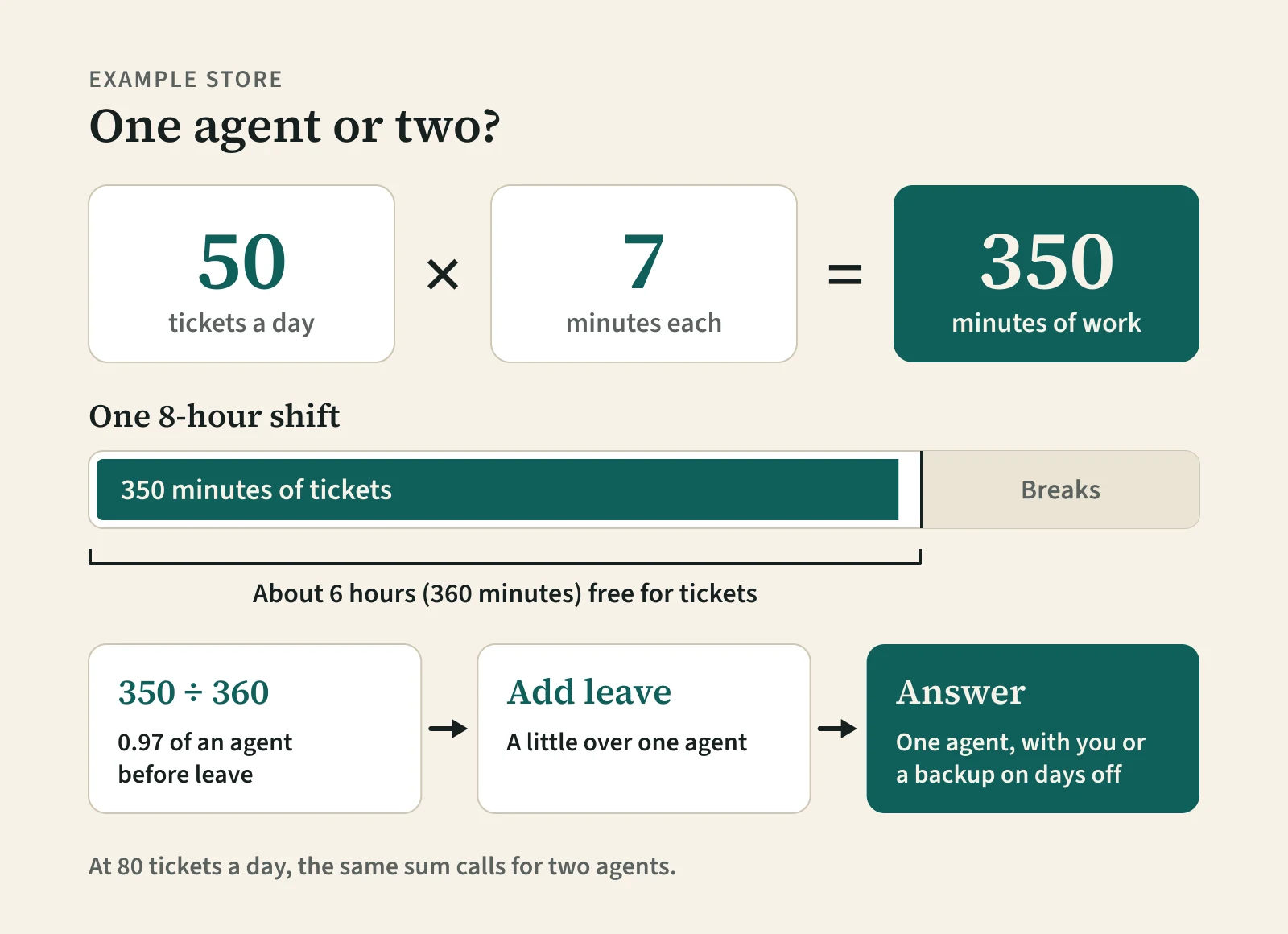
One line of arithmetic tells you whether one virtual assistant for customer support is enough, or whether you need two. Multiply your tickets per day by your average handle time, the minutes one ticket takes, notes included. Then allow for shrinkage, the paid time an agent is away from tickets, such as breaks, training and leave.
Take an example store with 50 tickets a day at 7 minutes each. These are example figures, not benchmarks. That is 350 minutes, just under 6 hours of work. Say an agent on an 8-hour shift has about 6 hours free for tickets once breaks are out. The store needs 0.97 of an agent before leave. Add the 15% leave and absence allowance our cost calculator uses for 24/7 cover, and you need a little over one. So one agent covers a normal day, and you or a backup cover their days off. At 80 tickets a day, the same sum calls for two.
To price your own numbers, run the cost calculator for a customer support role.
Freelancer, office seat or local employee: which comes first?
Your three results pick the route: a freelancer for a small queue of templates, a supervised office seat for a full-time or after-hours queue, and a local employee for work on site. A freelancer works when you can check their replies yourself. An office seat works when you do not want to manage the person. The comparison of a supervised office team, OnlineJobs.ph and a local hire sets out the cost and risk of each.
| What your data shows | Hours a week | After-hours share | Judgment share | First step |
|---|---|---|---|---|
| A small queue of templates | Under 20 | Low | Low | Saved replies, help pages, a part-time freelancer |
| A big queue that needs you | 20 or more | Any | High | Write the rules, then hire someone trained and checked |
| A big queue that waits overnight | 20 or more | A quarter or more | Low | A full-time seat on the hours you are offline |
| Work that needs a person on site | Any | Any | Any | A local employee |
If you run a store, the e-commerce support page lists the inbox signs I look for in a store. Whoever you hire, give them their own logins, not yours: how to give a VA access without your password.
When is a supervised office seat the right first hire?
A supervised office seat is the right first hire when support fills most of a working week and you do not want to be the manager. I am paid a commission by the provider for clients I introduce. The agent is employed by our partner provider in Davao City, and a team lead supervises up to 15 agents. You get live reporting sheets, updated in real time. If an agent leaves, a replacement starts in 3–5 working days on average.
You do not need it if support takes under about 20 hours a week. You do not need it if your rules still live in your head, or if a freelancer you trust already covers the gaps. In those cases a seat billed for about 173 hours a month would sit half idle.
If your data says yes, tell me about the role. The first shift is 5–10 working days after you sign.
Recap: virtual assistant for customer support
Hire a virtual assistant for customer support when 30 days of your own data show the need, not when a vendor's threshold does. Measure your hours, your after-hours share and your judgment share. Then price your hour against a seat and size the seat from tickets and handle time.
Reviewed November 2026. Help desk reports and BLS figures change; confirm the current reports in each vendor's own help pages.
Questions buyers ask
How do I measure how much time I spend on support?
Track it for 30 days. Start a timer each time you open the help desk, the inbox or marketplace messages, and stop it when you leave. Count replies from your phone at night and the refunds you process. Add up the month and divide by four. Small replies scattered through the day are the easiest to forget.
Which tickets should I hand off first?
Hand off the tickets that follow a template: order status, address changes, returns inside your policy, and questions your help pages already answer. Write a saved reply for each one, so the new person answers the way you would. Keep refunds outside policy, angry customers and product questions only you can answer until those rules are written down.
Can one agent cover my evenings and weekends?
Partly. One full-time agent works one shift, five days a week, so they can cover your evenings but not every evening and weekend too. The provider can staff your business hours, overnight, or 24/7; ask on the call which days a shift can include. Covering every hour of every day takes about 5 agents once leave is counted.
How fast can a support agent start?
Through our partner provider in Davao City, the first shift comes 5–10 working days after you sign the service agreement. In that window the provider recruits, you interview and approve a candidate, and initial training starts. There is no setup fee and no deposit. Use the wait to write your saved replies and refund rules.
Related reading
Sources
- Occupational Outlook Handbook: Customer Service Representatives (median hourly wage USD 21.53, May 2025; page modified October 29, 2026), US Bureau of Labor Statistics, November 10, 2026.
- Employer Costs for Employee Compensation, June 2026 (private industry benefits USD 14.07 per hour worked; released September 9, 2026), US Bureau of Labor Statistics, November 10, 2026.
- Analyzing your Support ticket activity and agent performance (share of tickets created each hour, average tickets per weekday), Zendesk, November 10, 2026.
- Reports: All Channels (Busiest Time of Day chart of new conversations by time of day; updated November 5, 2026), Help Scout, November 10, 2026.
- How metrics are calculated: Helpdesk performance (Busiest times tab: heatmap of hours and weekdays in your own time zone), Gorgias, November 10, 2026.
- How are you handling customer support once it grows past you personally? (forum thread, posted August 5, 2026; anecdote, not data), Shopify Community, November 10, 2026.
- 15 Signs You Need a Virtual Assistant in 2026 (vendor; hire at more than 15 hours a week, no source given; dated September 24, 2026), Wishup, November 10, 2026.
- When to Hire a Virtual Assistant: 8 Clear Signals It's Time (vendor; hire at more than 2 hours a day of admin, no source given; May 11, 2026), Stealth Agents, November 10, 2026.
We publish what the provider has confirmed in writing. If a figure is not here, we have not been able to confirm it.